
Collaboration Oktoberfest Beer Made With Germany's Hoppebräu
STATS
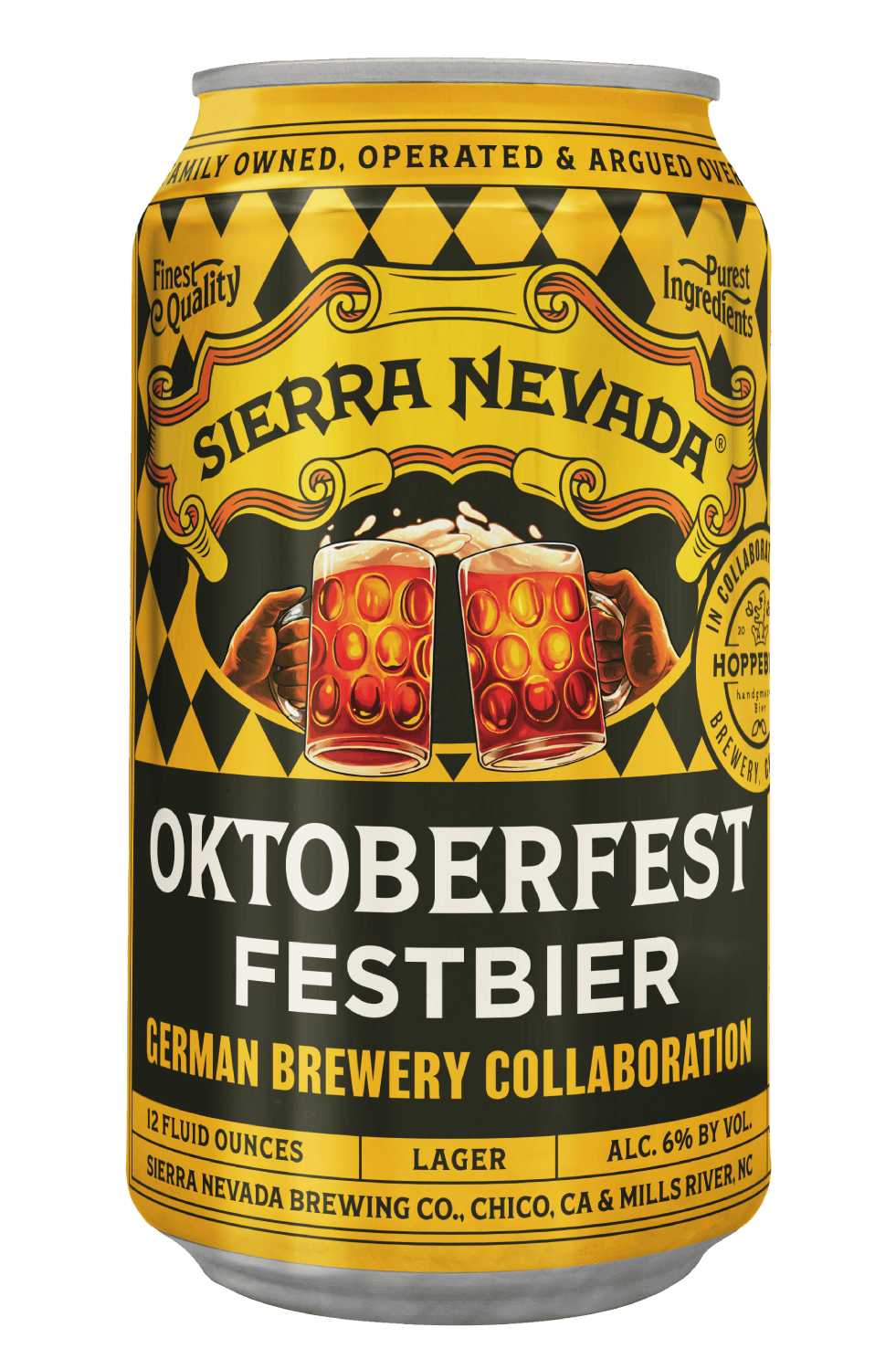
alcohol by volume (ABV)
6%
bitterness units (IBU)
32
Malts
Munich, Pilsner, Two-row Pale
Hops
Cascade, Hersbrucker
Yeast
Lager
WATCH


PROST!


Sierra Nevada Oktoberfest
The fall season is here, which means it’s time for one of our favorite seasonals: Sierra Nevada Oktoberfest. In keeping with tradition, our Oktoberfest is a collaboration with a German brewer.
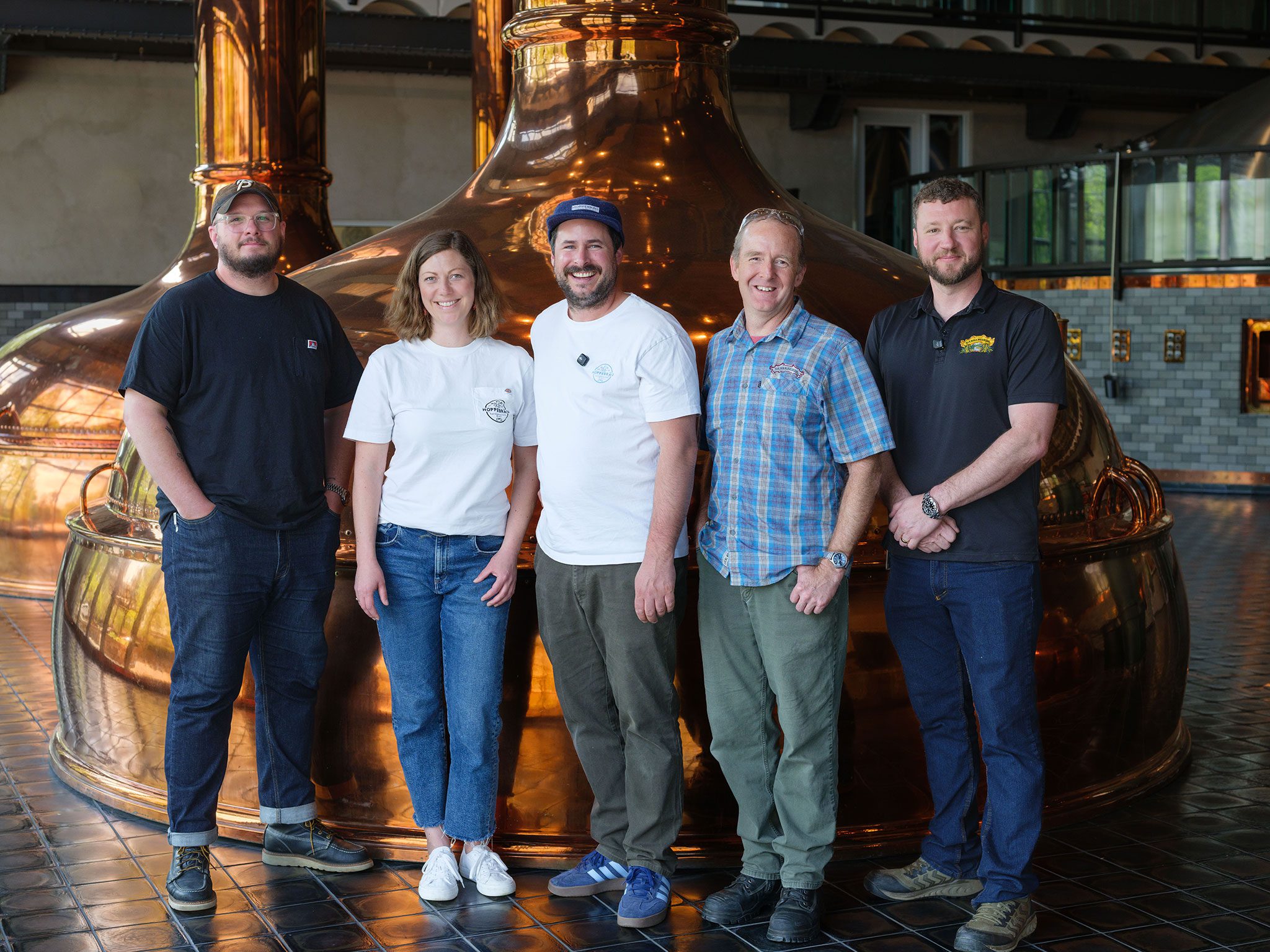
For Oktoberfest 2026, that brewer is Bavaria’s Hoppebräu, a brewery known for innovation. Like Sierra Nevada, Hoppebräu is family-owned and committed to quality. And like Sierra Nevada, their goal was to honor the rich tradition of Oktoberfest while also pushing the style forward.
“For us, it was important to show the two worlds of beer: the creative, modern style but also the tradition where everything comes from,” said Markus Hoppe, co-founder of Hoppebräu.
That meant an intense malt backbone of Pilsner and Munich malt with a hop-forward aroma achieved via dry-hopping. The resulting beer leads with the malt—rich with flavors of fresh-baked bread and honey—while a combination of German Hersbrucker noble and U.S. Cascade hops provides floral-herbal aromas with a fresh twist of citrus.
“It’s a true collaboration,” said our Chief Brewer Brian Grossman. “It’s a reflection of who we are and of who they are.” A traditional Oktoberfest with a modern twist.
Striking the right balance was crucial. For while Sierra Nevada and Hoppebräu are known for innovation, both breweries also know the importance of tradition. And perhaps no beer has a tradition like Oktoberfest.
The History of Oktoberfest
Oktoberfest has been beer’s biggest party for more than 200 years. And though the largest celebration is in Munich—drawing about six million people and serving about 6.5 million liters of beer each year!—festivals can be found around the world during September and October. But how did it all get started?
How did Oktoberfest start?
Oktoberfest started with a wedding. Celebrating the marriage of Crown Prince Ludwig of Bavaria and Princess Therese of Saxe-Hildburghausen, the party started on October 12, 1810, and ended with a horse race five days later. The entire city joined the festivities, which reportedly included art and regalia, 150 musicians, more than 6,500 gallons of beer, tens of thousands of sausages, and nearly 4,000 pounds of Swiss cheese. (Sounds like our kind of party.) On October 17, the celebration finally concluded with a horse race that drew 40,000 people. It was held on the very grounds where today’s Oktoberfest takes place! Two hundred years later, the party is still celebrated, not only in Munich, but around the world.
Beer’s Role in Oktoberfest
Aside from the obvious reasons (who doesn’t love beer at a party?), beer played an important role in historic Oktoberfest celebrations due to a 1553 decree. Issued long before commercial refrigeration became available, this decree forbade brewing beer in warmer months in an attempt to curb spoilage.
Brewers thus crafted stronger Märzen-style beers in March that could be stored underground in cool cellars through the summer months when brewing was forbidden. Once the October grain harvest arrived, brewers could fire up the kettles again—but not before emptying their reserves. The celebration of Oktoberfest thus became the perfect time to drink the rest of the stash, and Märzen soon became the official beer of Oktoberfest. Though today, the beer at Oktoberfest is a bit different than it was in years past. This brings us to…
Märzen vs Festbier: What’s The Difference?
A traditional Märzen is rich in flavor with a deep amber color and, usually, a moderate ABV—a beer made to withstand the cellar. But as time (and refrigeration) went on, a large and ongoing festival like Oktoberfest called for a lighter, more sessionable beer.
In the 1970s, the beer of Oktoberfest officially shifted to Festbier, a similar but lighter style. More golden in color, Festbier is known for its refreshing flavor and more sessionable ABV—a beer meant for enjoying long into the Okotberfest evenings.
Does Sierra Nevada Brew Oktoberfest?
You better believe it. Today, we honor this tradition by partnering with a German brewer to create our own Oktoberfest beer. Sometimes this is a Märzen, but usually—as with our 2026 partnership with Hoppebräu—it’s a Festbier. Watch our short film to learn more about the beer, the partnership, and the process.
When is Oktoberfest?
In 2026, the Munich Oktoberfest began on September 19, continuing through Sunday, October 4. Though in the United States and elsewhere, Oktoberfest celebrations don’t always follow the Munich dates, often continuing throughout October.
Why is Oktoberfest in September?
The annual festival originally honored the historic wedding dates, but over time, the Munich festival moved to September to allow for warmer nights and better weather conditions in the sometimes-unpredictable Bavarian climate. Today, celebrations around the world can span a month or more. We’re not complaining!
How to Host Your Own Oktoberfest
While the Munich festival is worth experiencing at least once, you need not fly to Bavaria to celebrate each year. Check your city’s listings for local Oktoberfest events, or host your own with our 2026 Oktoberfest collaboration beer, a batch of our Beer Cheese, and all the Bayern Maiden you can handle.
Prost!
Traditional Oktoberfest Festbier styles feature a rich, malty backbone with toasty, bread-like notes and a touch of subtle sweetness. You’ll often notice hints of herbal or mildly spicy noble hops, which add balance without overpowering the malt. The aroma is clean and inviting, with soft malt and light hop character, while the mouthfeel is smooth, medium-bodied, and crisp, thanks to cold fermentation with lager yeast.
At 6% ABV, our traditional Festbier beer strikes a balance between strength and drinkability. This aligns with traditional Festbier strength, offering a robust yet drinkable profile that complements its smooth, malty character.
Due to rising production costs, unpredictable weather, and declining ticket sales, we made the tough decision to hold off on our large-scale Oktoberfest event. While we loved Oktoberfest, the old model became unsustainable from a business standpoint. Now, we’re reassessing how to best celebrate one of our favorite beers with our local community.
Oktoberfest is a lager, meaning it’s brewed with bottom-fermenting yeast. Lagers are brewed and conditioned at cooler temperatures for a longer period of time, resulting in a clean, crisp, and smooth finish.
A Festbier is a smooth, clean German-style lager with a moderate malt flavor and light hop character. Oktoberfest beers typically fall into two categories: Festbier and Märzen. Märzens tend to be richer, maltier, and darker. As the name implies, Festbier is lighter and easy-drinking—perfect for festivals like Oktoberfest. Our Oktoberfest ABV is 6%, which is in line with the Festbier style.
Our authentic Oktoberfest is a modern Festbier with a smooth malt backbone and notes of fresh-baked bread and honey. Traditional German hops add a spicy-herbal flavor and balanced bitterness with a crisp, clean finish.
Our Oktoberfest has a rich malt flavor that’s perfect for cooler weather, but an easy-drinking crispness that still stands up to the heat, making it one of the best autumn beers and a great beer for Oktoberfest celebrations!
Our annual Oktoberfest beer comes out in August but is only in market until late October. Grab this limited release before it’s gone. Then, it’s on to Celebration season!
FAQ
Traditional Oktoberfest Festbier styles feature a rich, malty backbone with toasty, bread-like notes and a touch of subtle sweetness. You’ll often notice hints of herbal or mildly spicy noble hops, which add balance without overpowering the malt. The aroma is clean and inviting, with soft malt and light hop character, while the mouthfeel is smooth, medium-bodied, and crisp, thanks to cold fermentation with lager yeast.
At 6% ABV, our traditional Festbier beer strikes a balance between strength and drinkability. This aligns with traditional Festbier strength, offering a robust yet drinkable profile that complements its smooth, malty character.
Due to rising production costs, unpredictable weather, and declining ticket sales, we made the tough decision to hold off on our large-scale Oktoberfest event. While we loved Oktoberfest, the old model became unsustainable from a business standpoint. Now, we’re reassessing how to best celebrate one of our favorite beers with our local community.
Oktoberfest is a lager, meaning it’s brewed with bottom-fermenting yeast. Lagers are brewed and conditioned at cooler temperatures for a longer period of time, resulting in a clean, crisp, and smooth finish.
A Festbier is a smooth, clean German-style lager with a moderate malt flavor and light hop character. Oktoberfest beers typically fall into two categories: Festbier and Märzen. Märzens tend to be richer, maltier, and darker. As the name implies, Festbier is lighter and easy-drinking—perfect for festivals like Oktoberfest. Our Oktoberfest ABV is 6%, which is in line with the Festbier style.
Our authentic Oktoberfest is a modern Festbier with a smooth malt backbone and notes of fresh-baked bread and honey. Traditional German hops add a spicy-herbal flavor and balanced bitterness with a crisp, clean finish.
Our Oktoberfest has a rich malt flavor that’s perfect for cooler weather, but an easy-drinking crispness that still stands up to the heat, making it one of the best autumn beers and a great beer for Oktoberfest celebrations!
Our annual Oktoberfest beer comes out in August but is only in market until late October. Grab this limited release before it’s gone. Then, it’s on to Celebration season!
Looking for more?
We’ve got a diverse line-up for every occasion and season, every palate and preference. Craft beer is all about exploration! Are you ready for an adventure? Go exploring.